Introduction: The AI-Driven Business Era Has Arrived
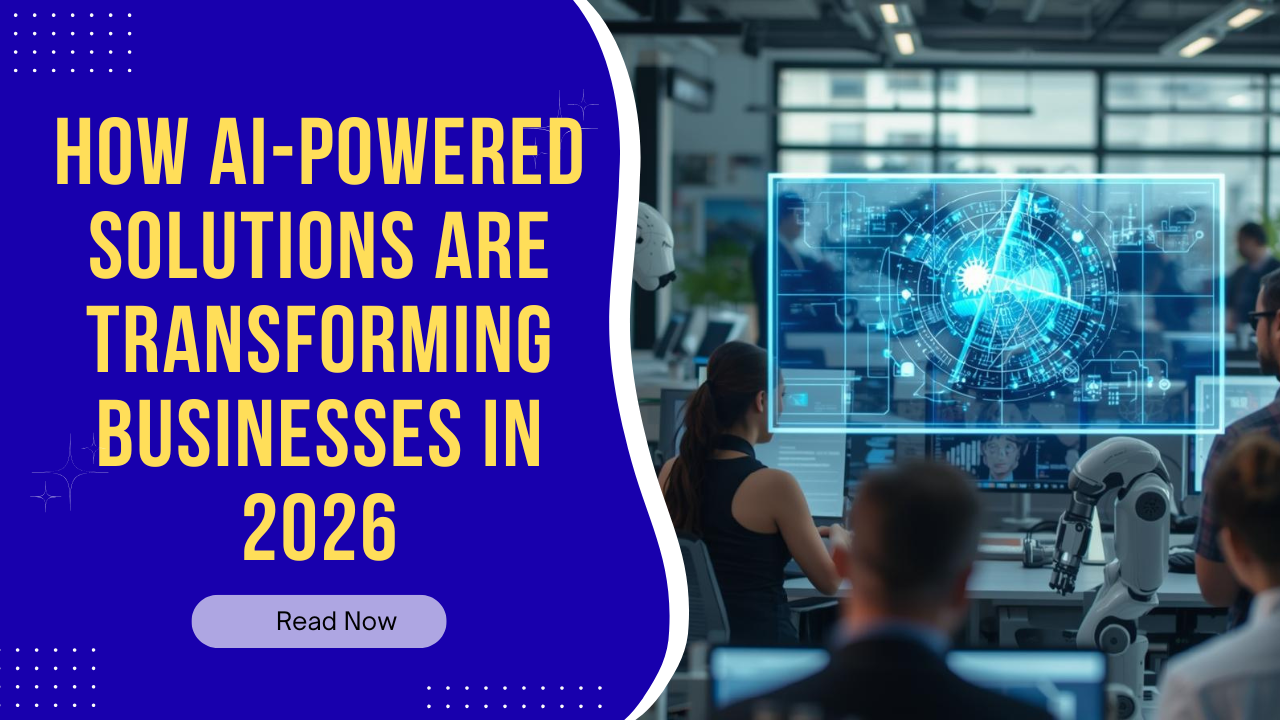
By 2026, artificial intelligence is no longer an experimental technology reserved for tech giants. It has become a core business capability across industries, reshaping how organizations operate, compete, and grow. AI-powered solutions now influence everything from strategic decision-making and customer engagement to supply chain management and cybersecurity.
What sets 2026 apart is not just better algorithms, but widespread adoption, deeper integration, and measurable business impact. Companies that effectively use AI are faster, more resilient, and better aligned with customer expectations. This article explores how AI-powered solutions are transforming businesses in 2026, with practical insights into real-world applications, benefits, and implementation strategies.
The Evolution of AI-Powered Solutions in Business
From Automation to Intelligence
Earlier AI adoption focused heavily on automation—reducing manual tasks and improving efficiency. In 2026, AI systems go further by understanding context, learning continuously, and supporting complex decisions. Businesses now rely on AI not just to execute tasks, but to recommend actions and predict outcomes.
AI as a Strategic Business Asset
AI is no longer confined to IT departments. It has become a board-level priority, directly tied to revenue growth, cost optimization, and competitive advantage. Organizations now treat data and AI models as long-term assets, much like intellectual property.

How AI Is Transforming Core Business Functions
AI in Operations and Process Optimization
Intelligent Process Automation
AI-powered solutions now combine robotic process automation (RPA) with machine learning. This enables systems to handle exceptions, adapt to changes, and improve processes over time—reducing errors and operational costs.
Predictive Maintenance
In manufacturing, energy, and logistics, AI predicts equipment failures before they occur. This minimizes downtime, extends asset life, and improves safety, delivering significant ROI.
AI-Powered Decision-Making and Analytics
Real-Time Business Intelligence
Traditional dashboards have evolved into AI-driven analytics platforms that explain why something is happening and what to do next. Executives receive real-time insights with recommended actions based on predictive models.
Scenario Planning and Forecasting
AI-powered forecasting models simulate multiple business scenarios, helping leaders make informed decisions under uncertainty—especially valuable in volatile markets.
Transforming Customer Experience with AI
Personalized Customer Engagement
AI-powered solutions analyze customer behavior, preferences, and intent across channels. In 2026, personalization goes beyond recommendations to include dynamic pricing, tailored content, and proactive support.
Conversational AI and Virtual Assistants
Advanced conversational AI now understands context, emotion, and intent. These systems handle complex customer interactions, reduce response times, and maintain consistent brand experiences across digital touchpoints.
Customer Retention and Loyalty
AI predicts churn risks and identifies the best interventions to retain customers—such as personalized offers or timely outreach—helping businesses build long-term relationships.
AI in Marketing and Sales Transformation
Smarter Marketing Campaigns
AI-powered marketing platforms optimize campaigns in real time, adjusting messaging, channels, and budgets based on performance data. This improves conversion rates and reduces wasted spend.
Sales Forecasting and Lead Scoring
AI analyzes historical data and buyer behavior to prioritize high-quality leads and forecast sales outcomes with greater accuracy. Sales teams spend more time selling and less time qualifying prospects.
Workforce Transformation and Human–AI Collaboration
Augmenting, Not Replacing, Talent
In 2026, successful organizations focus on human–AI collaboration. AI handles repetitive and data-intensive tasks, while employees focus on creativity, strategy, and relationship-building.
AI-Powered Talent Management
AI-powered solutions help with recruitment, skills mapping, and workforce planning. They identify skill gaps, recommend training, and support internal mobility—creating more agile organizations.
Reskilling for the AI Economy
Businesses invest heavily in upskilling programs to ensure employees can effectively work alongside AI tools. This reduces resistance to adoption and increases overall productivity.
AI and Cybersecurity: Protecting Digital Businesses
Threat Detection and Prevention
AI-powered cybersecurity systems detect anomalies and threats in real time, often before human teams are aware. This proactive approach is critical as cyberattacks become more sophisticated.
Automated Incident Response
AI can isolate affected systems, recommend mitigation steps, and even execute responses autonomously—reducing damage and recovery time.
Ethical AI and Responsible Adoption
Data Privacy and Governance
With increased AI adoption comes greater responsibility. Businesses in 2026 prioritize strong data governance frameworks to ensure compliance, transparency, and customer trust.
Reducing Bias and Ensuring Fairness
AI-powered solutions are regularly audited to identify and reduce bias. Ethical AI practices are not just regulatory requirements—they are essential for brand reputation and long-term success.
Challenges Businesses Face When Adopting AI
Integration with Legacy Systems
Many organizations still struggle to integrate AI with existing infrastructure. Successful adoption requires modern data architectures and cross-functional collaboration.
Talent and Cultural Barriers
AI transformation is as much about people as technology. Resistance to change, lack of AI literacy, and unclear ownership can slow progress if not addressed proactively.
Best Practices for Implementing AI-Powered Solutions in 2026
Start with Clear Business Goals
AI initiatives should be driven by measurable outcomes—such as cost reduction, revenue growth, or customer satisfaction—not by technology hype.
Invest in Data Quality
High-quality, well-governed data is the foundation of effective AI. Without it, even the most advanced models will fail.
Scale Responsibly
Pilot projects should be designed with scalability in mind. Successful businesses build flexible AI platforms that can evolve with changing needs.
The Future Outlook: What’s Next Beyond 2026?
AI-powered solutions will continue to evolve toward greater autonomy, explainability, and collaboration. Businesses that embed AI into their core strategy—not just isolated use cases—will be best positioned to innovate and lead in the coming years.
Conclusion: AI as a Competitive Necessity
In 2026, AI-powered solutions are not a luxury—they are a necessity for businesses that want to remain competitive. From smarter decision-making and operational efficiency to enhanced customer experiences and workforce transformation, AI is redefining what successful organizations look like.
The key takeaway is clear: businesses that invest in responsible, strategic AI adoption today will shape the markets of tomorrow. Those that delay risk falling behind in an increasingly intelligent economy.